Get in your inbox the latest News and Offers from
- Dallas Texas, US

- Office Time:
- Monday to Friday 9:00am - 6:00pm
- Call Us:
- +1 (408) 675-6503
- Email:
- contact@wainsbillingsolutions.com
How Denial Management Improves Cash Flow for Healthcare Providers
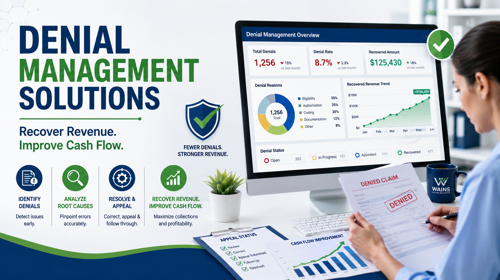
How Denial Management Improves Cash Flow for Healthcare Providers
In today's healthcare industry, maintaining consistent cash flow has become increasingly challenging due to rising claim denials, complex payer requirements, reimbursement delays, and administrative inefficiencies. Denial management has emerged as a critical component of healthcare revenue cycle management, helping providers identify denied claims, recover lost revenue, reduce payment delays, and strengthen overall financial performance.
Claim denials can significantly disrupt healthcare operations by delaying reimbursements and increasing administrative workloads. Without an organized denial management process, healthcare providers may experience revenue leakage, reduced profitability, and operational instability. Implementing a proactive denial management strategy allows healthcare organizations to improve collections, accelerate reimbursements, and maintain healthier financial operations.
Understanding Denial Management
Denial management is the process of identifying, analyzing, correcting, and resolving denied insurance claims to maximize reimbursement opportunities. It involves investigating the root causes of claim denials, correcting billing inaccuracies, managing appeals, and implementing preventive measures to reduce recurring denial issues.
Healthcare claim denials can occur for several reasons, including:
- Incorrect medical coding
- Missing or incomplete documentation
- Eligibility verification errors
- Lack of prior authorization
- Duplicate claim submissions
- Non-compliance with payer guidelines
- Inaccurate patient information
An effective denial management system helps healthcare providers address these issues quickly and efficiently while improving overall revenue cycle performance.
The Financial Impact of Claim Denials
Denied claims can create significant financial pressure for healthcare organizations. Delayed reimbursements reduce cash flow, increase accounts receivable balances, and require additional administrative resources to resolve billing issues.
The financial consequences of unresolved denials may include:
- Lost reimbursement opportunities
- Increased operational costs
- Delayed payment cycles
- Reduced profitability
- Higher administrative workload
- Revenue leakage and write-offs
Healthcare providers that fail to address denial trends proactively often experience long-term financial inefficiencies and reduced operational performance.
How Denial Management Improves Cash Flow
Effective denial management directly improves cash flow by accelerating claim resolution and recovering unpaid reimbursements. By identifying and correcting denial issues promptly, healthcare organizations can reduce delays in payment processing and maintain more consistent revenue generation.
A structured denial management process helps providers:
- Recover denied and underpaid claims
- Reduce outstanding accounts receivable
- Improve reimbursement timelines
- Increase first-pass claim acceptance rates
- Strengthen billing accuracy
- Improve overall financial stability
When claims are resolved efficiently, healthcare providers experience healthier cash flow and improved operational sustainability.
Identifying Root Causes of Denials
One of the most important aspects of denial management is root cause analysis. Understanding why claims are denied allows healthcare organizations to implement targeted corrective actions and prevent recurring billing issues.
Common denial trends often involve:
- Coding inaccuracies
- Documentation deficiencies
- Eligibility verification failures
- Authorization issues
- Payer-specific compliance errors
Analyzing denial patterns helps healthcare providers strengthen internal billing workflows, improve operational accuracy, and reduce future denials.
The Role of Technology in Denial Management
Modern healthcare organizations increasingly rely on advanced billing technologies and analytics tools to improve denial management efficiency. Technology-driven denial management systems help automate workflows, identify billing errors, monitor denial trends, and accelerate claim resolution.
Technology-supported denial management solutions provide:
- Automated claim scrubbing
- Real-time claim tracking
- Denial analytics and reporting
- Automated workflow management
- Faster appeals processing
- Improved reimbursement visibility
By leveraging advanced technology solutions, healthcare providers can improve operational efficiency while reducing manual processing errors and administrative burdens.
Preventing Future Claim Denials
Successful denial management extends beyond resolving denied claims. It also focuses on implementing preventive strategies designed to reduce future denials and improve claim accuracy from the beginning of the billing process.
Effective denial prevention strategies include:
- Accurate medical coding
- Thorough documentation review
- Proactive eligibility verification
- Timely claim submission
- Staff training and compliance monitoring
- Continuous workflow evaluation
Preventive denial management helps healthcare organizations maintain more stable revenue cycles and improve long-term financial performance.
Enhancing Operational Efficiency
A strong denial management process not only improves cash flow but also enhances operational productivity. By reducing the time spent resolving denied claims and managing reimbursement issues, healthcare organizations can allocate more resources toward patient care and strategic growth initiatives.
Improved operational efficiency results in:
- Reduced administrative workload
- Faster reimbursement cycles
- Better staff productivity
- Increased financial transparency
- Improved patient billing experience
Healthcare organizations that optimize denial management processes are better positioned to maintain sustainable growth and operational stability.
Compliance and Revenue Integrity
Healthcare billing and reimbursement processes require strict adherence to payer guidelines and industry regulations. Denial management helps healthcare providers maintain compliance by ensuring claims are submitted accurately and supported by proper documentation.
Compliance-focused denial management processes help reduce:
- Audit risks
- Billing inaccuracies
- Regulatory penalties
- Reimbursement disputes
Maintaining revenue integrity and compliance is essential for protecting the financial health and reputation of healthcare organizations.
Conclusion
Denial management plays a vital role in improving cash flow, reducing revenue leakage, and strengthening the overall financial performance of healthcare organizations. As healthcare reimbursement requirements continue to evolve, providers must implement proactive denial management strategies to reduce claim denials, accelerate reimbursements, and maintain operational efficiency.
By focusing on root cause analysis, billing accuracy, technology-driven workflows, and preventive strategies, healthcare providers can improve reimbursement outcomes and maintain a healthier revenue cycle. Organizations that prioritize effective denial management are better equipped to reduce administrative burdens, improve financial stability, and deliver more efficient healthcare operations in today?s increasingly complex healthcare environment.