Get in your inbox the latest News and Offers from
- Dallas Texas, US

- Office Time:
- Monday to Friday 9:00am - 6:00pm
- Call Us:
- +1 (408) 675-6503
- Email:
- contact@wainsbillingsolutions.com
Why Insurance Eligibility Verification Is Critical for Faster Reimbursements
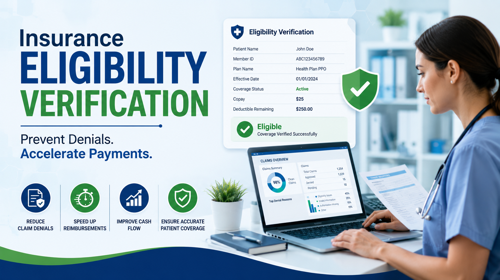
Why Insurance Eligibility Verification Is Critical for Faster Reimbursements
Insurance eligibility verification is one of the most important front-end processes within the healthcare revenue cycle. Accurate verification of a patient?s insurance coverage, benefits, co-pay responsibilities, and authorization requirements before services are rendered helps healthcare providers reduce claim denials, improve billing accuracy, accelerate reimbursements, and maintain healthier cash flow.
In today?s healthcare environment, insurance policies and payer requirements continue to become increasingly complex. Inaccurate patient information, inactive insurance coverage, missing authorizations, or incomplete eligibility verification can result in delayed payments, denied claims, administrative rework, and financial losses for healthcare organizations. Implementing a structured and proactive eligibility verification process is essential for maintaining operational efficiency and financial stability.
Understanding Insurance Eligibility Verification
Eligibility verification is the process of confirming a patient?s insurance coverage and benefits before healthcare services are provided. This process ensures that patient insurance information is active, accurate, and aligned with payer requirements.
Eligibility verification typically includes:
- Confirming active insurance coverage
- Verifying patient demographics
- Identifying co-pays and deductibles
- Reviewing coverage limitations
- Confirming prior authorization requirements
- Verifying coordination of benefits
- Reviewing payer-specific policies
Accurate verification allows healthcare providers to avoid billing complications and improve the overall efficiency of the reimbursement process.
Why Eligibility Verification Matters
Eligibility verification directly impacts claim acceptance rates and reimbursement timelines. Incorrect or incomplete insurance information is one of the leading causes of claim denials within the healthcare industry. Even small verification errors can create delays in payment processing and increase administrative burdens for healthcare organizations.
Healthcare providers that prioritize accurate eligibility verification benefit from:
- Reduced claim denials and rejections
- Faster reimbursement cycles
- Improved billing accuracy
- Reduced administrative rework
- Better cash flow management
- Improved patient financial transparency
- Enhanced operational efficiency
By verifying patient coverage before services are rendered, healthcare organizations can reduce preventable billing issues and strengthen revenue cycle performance.
Common Eligibility Verification Challenges
Healthcare providers often face several challenges during the verification process. Insurance coverage changes, incomplete patient information, evolving payer requirements, and authorization complexities can create operational obstacles and increase the risk of denied claims.
Some of the most common challenges include:
- Inactive or expired insurance coverage
- Incorrect patient demographic information
- Missing prior authorizations
- Incomplete benefit verification
- Coordination of benefits issues
- Payer-specific policy changes
- Delayed verification processes
Without an organized verification workflow, these challenges can negatively impact reimbursement timelines and operational productivity.
The Role of Technology in Eligibility Verification
Modern healthcare organizations increasingly rely on advanced technology solutions to improve verification accuracy and streamline front-end revenue cycle operations. Automated eligibility verification systems help reduce manual errors, improve workflow efficiency, and provide real-time access to payer information.
Technology-driven verification systems support:
- Real-time insurance verification
- Automated eligibility checks
- Electronic payer communication
- Faster coverage validation
- Improved reporting and analytics
- Reduced administrative workload
By leveraging modern technology solutions, healthcare providers can improve reimbursement efficiency and maintain greater control over billing operations.
Improving Patient Financial Transparency
Accurate eligibility verification also plays an important role in enhancing the patient experience. Verifying co-pays, deductibles, coverage limitations, and authorization requirements in advance allows healthcare providers to communicate financial responsibilities more clearly to patients before treatment begins.
Transparent financial communication helps:
- Reduce patient confusion
- Improve payment collection rates
- Minimize unexpected billing disputes
- Strengthen patient trust and satisfaction
Patients are more likely to have a positive healthcare experience when billing expectations are explained clearly and accurately from the beginning.
Preventing Claim Denials Through Proactive Verification
One of the primary goals of eligibility verification is denial prevention. Proactive verification processes help healthcare organizations identify potential coverage issues before claims are submitted to insurance carriers.
Effective verification strategies include:
- Reviewing insurance information before appointments
- Confirming authorization requirements
- Verifying benefit limitations
- Maintaining accurate patient records
- Communicating with payers proactively
- Monitoring policy updates and payer changes
By identifying issues early, healthcare organizations can significantly reduce claim denials and improve reimbursement timelines.
Compliance and Data Security
Eligibility verification involves handling sensitive patient and insurance information, making compliance and data security essential components of the verification process. Healthcare organizations must maintain strict adherence to HIPAA regulations and data protection standards to safeguard confidential patient information.
Secure verification workflows and compliance-focused procedures help healthcare providers maintain operational integrity while reducing legal and financial risks.
Conclusion
Insurance eligibility verification is a critical component of an efficient healthcare revenue cycle. Accurate and proactive verification processes help healthcare providers reduce claim denials, accelerate reimbursements, improve billing accuracy, and enhance the overall patient financial experience.
As healthcare reimbursement requirements continue to evolve, organizations that prioritize effective eligibility verification strategies and technology-driven workflows will be better positioned to improve operational efficiency, strengthen financial performance, and maintain long-term revenue cycle success.
By implementing structured verification procedures and maintaining accurate payer communication, healthcare organizations can reduce administrative burdens, improve reimbursement outcomes, and provide a smoother financial experience for both providers and patients.