Get in your inbox the latest News and Offers from
- Dallas Texas, US
- Office Time:
- Monday to Friday 9:00am - 6:00pm
- Call Us:
- +1 (408) 675-6503
- Email:
- contact@wainsbillingsolutions.com
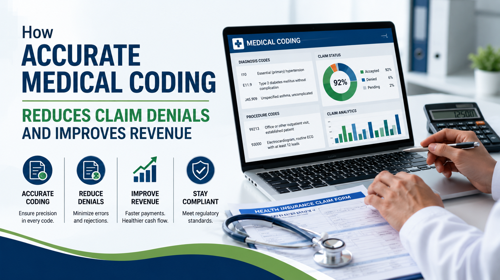
How Accurate Medical Coding Reduces Claim Denials and Improves Revenue
How Accurate Medical Coding Reduces Claim Denials and Improves Revenue
Accurate medical coding is one of the most important components of a successful healthcare revenue cycle. Every diagnosis, treatment, and medical procedure performed within a healthcare organization must be translated into standardized medical codes before claims are submitted to insurance providers. Even minor coding inaccuracies can lead to claim denials, delayed reimbursements, compliance risks, and significant revenue loss for healthcare providers.
In today?s increasingly complex healthcare environment, insurance companies continue to implement stricter billing regulations, documentation requirements, and reimbursement guidelines. As a result, healthcare organizations must prioritize coding accuracy to maintain financial stability, improve operational efficiency, and ensure timely reimbursement for services rendered.
Understanding Medical Coding
Medical coding is the process of converting healthcare diagnoses, procedures, treatments, and medical services into standardized codes recognized by insurance carriers and regulatory agencies. These codes are essential for claim submission, reimbursement processing, reporting, and compliance monitoring.
The most commonly used coding systems include:
- ICD-10 Codes
- CPT Codes
- HCPCS Codes
Accurate coding ensures that healthcare providers receive appropriate reimbursement while maintaining compliance with payer guidelines and healthcare regulations.
The Impact of Coding Errors on Healthcare Revenue
Coding errors are one of the leading causes of claim denials in the healthcare industry. Incorrect diagnosis codes, incomplete documentation, mismatched procedure codes, and billing inaccuracies can cause insurance companies to reject or delay claims.
Common coding-related issues include:
- Incorrect diagnosis or procedure codes
- Missing or incomplete documentation
- Upcoding or undercoding
- Failure to meet payer-specific requirements
- Inaccurate modifiers and billing combinations
- Non-compliance with coding updates
These issues can negatively affect reimbursement timelines, increase administrative workload, and disrupt cash flow for healthcare organizations.
How Accurate Coding Reduces Claim Denials
Accurate medical coding significantly improves first-pass claim acceptance rates and reduces the likelihood of reimbursement delays. Proper coding ensures that submitted claims align with payer guidelines, medical necessity requirements, and insurance policies.
Healthcare providers that maintain strong coding practices benefit from:
- Reduced claim denials and rejections
- Faster reimbursement processing
- Improved billing accuracy
- Reduced administrative rework
- Enhanced compliance with healthcare regulations
- Increased operational efficiency
By minimizing coding errors before claims are submitted, healthcare organizations can strengthen revenue cycle performance and reduce financial disruptions.
The Role of Documentation in Coding Accuracy
Accurate documentation is essential to successful medical coding. Coders rely on detailed clinical documentation to assign the correct diagnosis and procedure codes for each patient encounter. Incomplete or unclear documentation increases the risk of coding inaccuracies and claim denials.
Effective documentation practices should include:
- Clear physician notes
- Detailed treatment descriptions
- Accurate procedure documentation
- Complete patient history information
- Proper medical necessity support
- Strong collaboration between healthcare providers and coding professionals helps improve coding accuracy and reimbursement outcomes.
- Technology and Coding Efficiency
- Modern healthcare organizations increasingly utilize advanced coding technologies and automated billing systems to improve coding efficiency and reduce manual errors. Technology-driven coding solutions help healthcare providers streamline workflows, improve accuracy, and maintain compliance with evolving payer requirements.
- Technology-supported coding systems offer benefits such as:
- Automated coding assistance
- Real-time claim validation
- Error detection and claim scrubbing
- Coding compliance monitoring
- Improved reporting and analytics
- Faster claims processing
By integrating technology into coding operations, healthcare organizations can strengthen financial performance and improve reimbursement efficiency.
Compliance and Regulatory Considerations
Healthcare coding must comply with strict industry regulations and payer-specific billing guidelines. Failure to maintain coding compliance can result in audits, penalties, denied claims, and financial losses.
Healthcare providers should prioritize:
- Regular coding audits
- Ongoing coder training and education
- Compliance monitoring
- Accurate documentation review
- Staying updated with coding guideline changes
Maintaining compliance not only improves reimbursement accuracy but also helps healthcare organizations reduce legal and financial risks.
Benefits of Professional Medical Coding Services
Partnering with experienced medical coding professionals can significantly improve billing accuracy and operational performance. Professional coding services help healthcare providers maintain compliance, reduce denials, improve reimbursement rates, and optimize revenue cycle management.
Benefits of professional coding support include:
- Increased coding accuracy
- Reduced administrative burden
- Improved reimbursement performance
- Faster payment cycles
- Reduced denial rates
- Better compliance management
Healthcare organizations that invest in accurate coding practices are better positioned to maintain financial stability and long-term operational success.
Conclusion
Accurate medical coding is essential for reducing claim denials, improving reimbursement efficiency, and strengthening the overall healthcare revenue cycle. Inaccurate coding not only impacts financial performance but also increases administrative burdens and compliance risks for healthcare providers.
By implementing strong coding practices, maintaining detailed documentation, utilizing modern technology solutions, and prioritizing compliance, healthcare organizations can improve claim acceptance rates, accelerate reimbursements, and maximize revenue opportunities.
As healthcare billing requirements continue to evolve, organizations that focus on coding accuracy and operational efficiency will remain better equipped to navigate reimbursement challenges and maintain sustainable financial growth.